




Geoffrey Bawa (1919–2003), a Sri Lankan architect representing the 20th century, is known as the founder of ‘Tropical Modernism’.
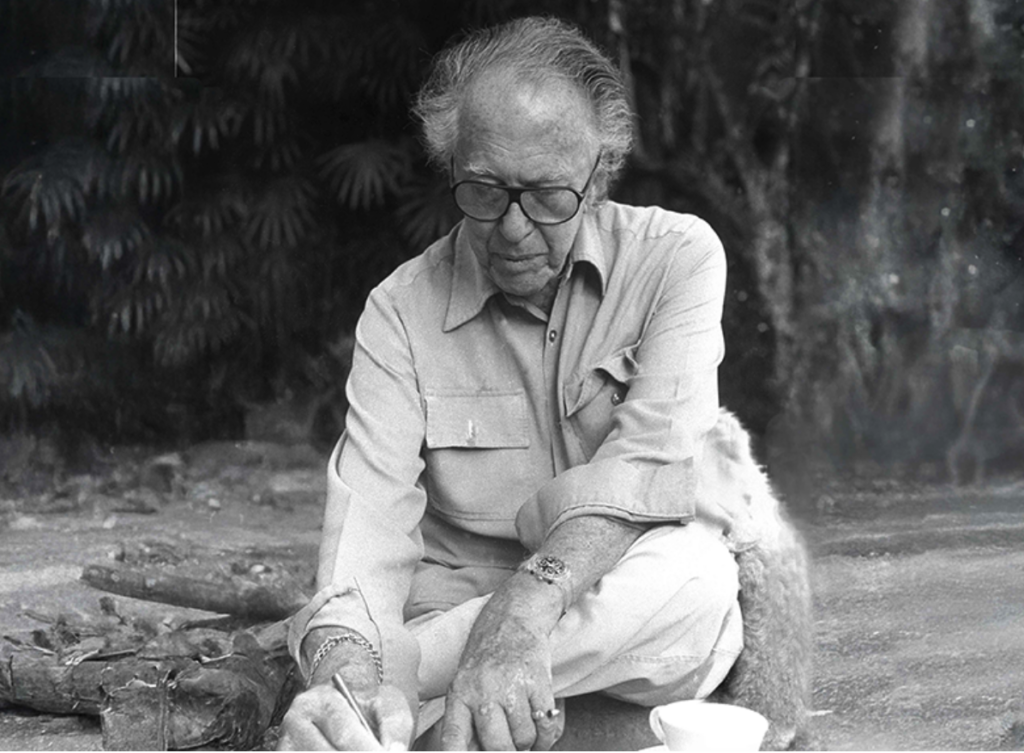
Bawa originally worked as a solicitor in Britain, but in his late thirties he changed careers to become an architect, drawn by the rich natural environment and ideal landscapes of his homeland, Sri Lanka.
His architecture is always designed with profound insight into the local climate, natural environment and culture, seamlessly connecting interior and exterior spaces to create environments that integrate with nature.
 Ravi
RaviIndeed, open designs suited to tropical climates, the fusion of building and nature, and the modern reinterpretation of traditional architectural elements are indispensable keywords when discussing Bawa architecture.
 Emma
EmmaHis works range from resort hotels to public buildings, each receiving high acclaim for their beautiful appearance harmonising with the surrounding environment.
Bawa’s masterpieces remain in his homeland of Sri Lanka, where they continue to influence architects and designers worldwide. For travellers visiting Sri Lanka, a journey exploring Bawa’s architecture offers a unique opportunity to experience the profound depth of the country’s culture and natural beauty.
This time, we present a carefully selected list of ten representative buildings designed by Geoffrey Bawa that still exist in Sri Lanka, which we highly recommend European travellers, particularly those from the UK, should visit.
Covering everything from hotels and mansions to religious and public buildings, we provide detailed explanations of each site’s highlights and current usage, along with visiting information, access methods, whether reservations are required, and advice for travellers from Europe.
RaviExperience the world of Bawa’s spatial creations, rooted in Sri Lanka’s rich nature and culture, and let it become a special memory of your journey.
Heritance Kandalama
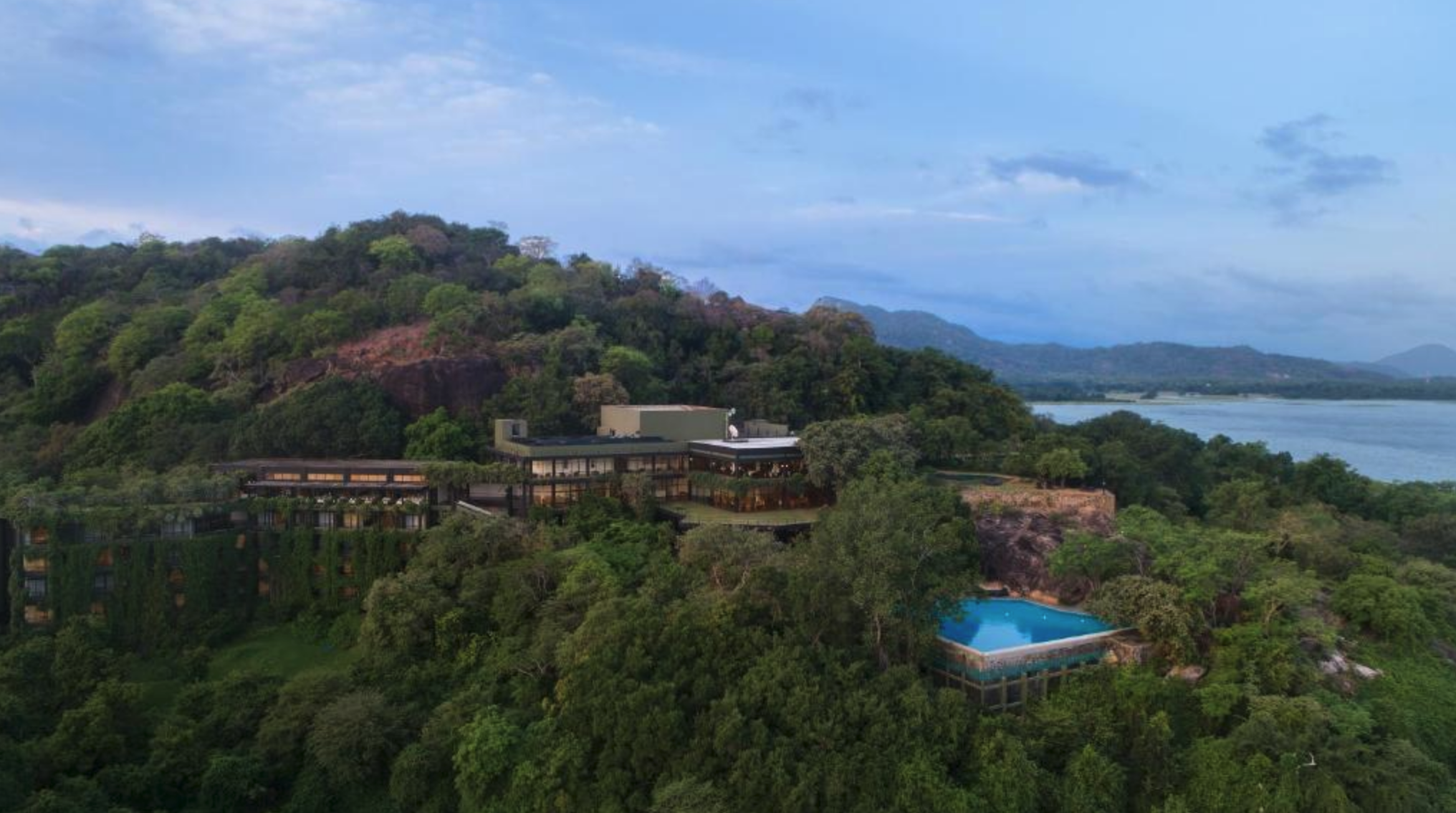
Heritance Kandalama is a resort hotel nestled within the jungle.
Heritance Kandalama, situated near the ancient city of Dambulla in central Sri Lanka, is a renowned resort hotel often hailed as the “masterpiece of Bawa architecture”.
The buildings, constructed along the slopes of the forest clinging to the massive rock face, were designed to be gradually enveloped by greenery over time, embodying the intention that they would eventually return to the forest.
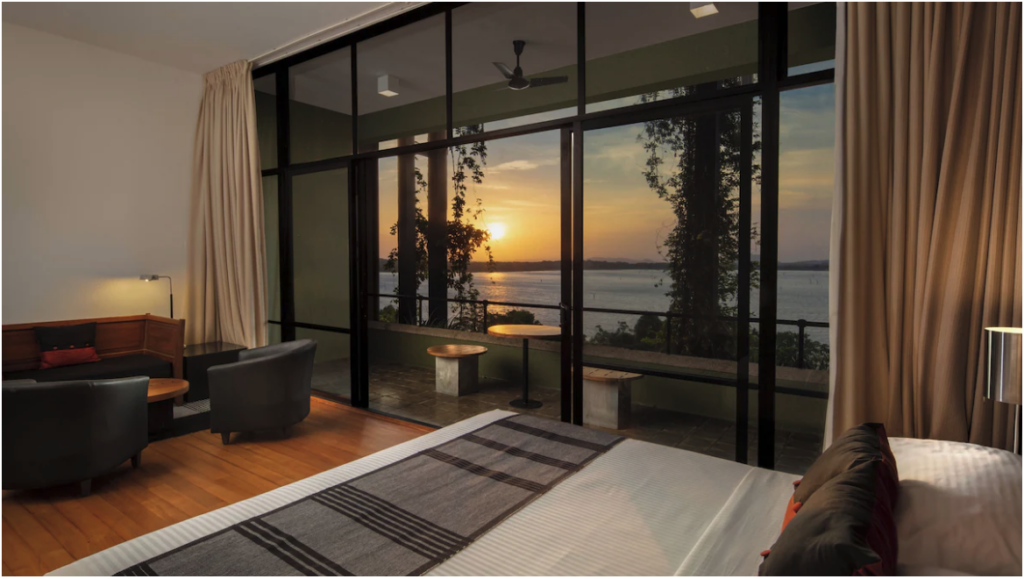
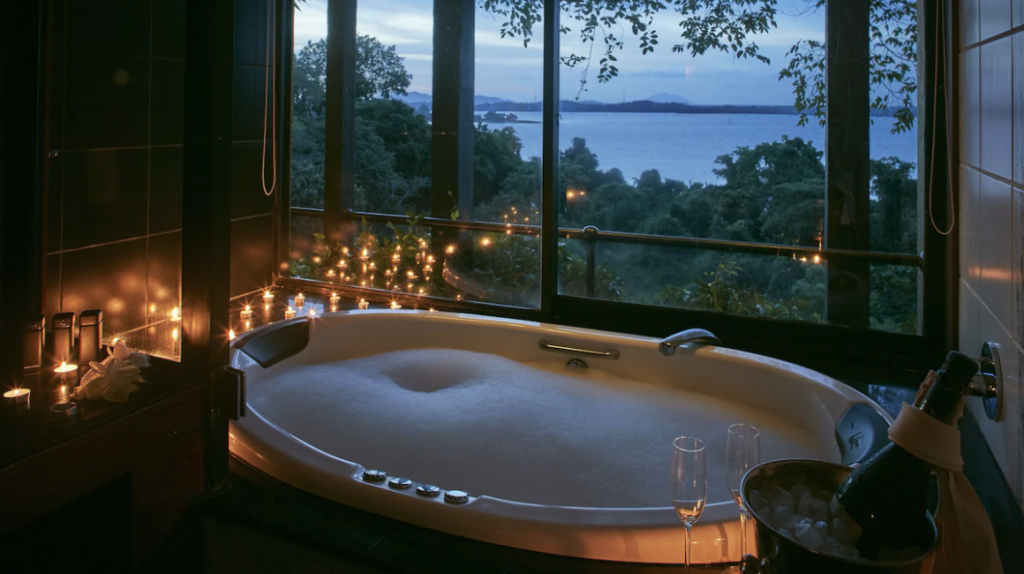
True to its name, trees and vines flourish across the building’s walls and rooftops, blending seamlessly into the landscape from afar as if becoming one with the forest. Inside, exposed bedrock remains untouched, creating a unique spatial experience where architecture seems fused with a natural cave.
The open structure, where the boundary between inside and outside is scarcely perceptible, is Bawa’s true hallmark. Wild monkeys and birds roam freely even within the hotel’s courtyards and corridors.
The grounds are a haven for wildlife, and with a little luck, one might encounter wild elephants roaming the neighbouring forests.
EmmaThe greatest attraction of Heritance Kandalama is, without question, its harmony with nature. The elongated building, stretching approximately 1 kilometre in length, is positioned along the contours of the jungle terrain, ensuring every guest room offers views of tropical greenery and the surrounding lake.
At the heart of the hotel lies a large atrium with a soaring ceiling, designed to allow the breeze and light of the tropical rainforest to permeate the interior. Particularly renowned is the infinity pool, which appears to merge seamlessly with Kandaram Lake below.
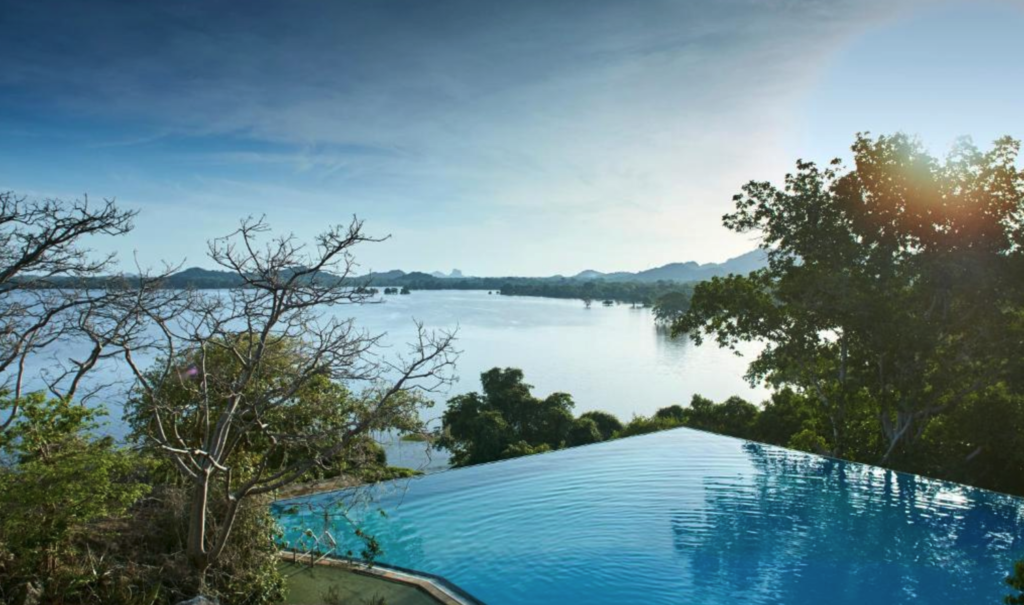
This technique, which involves omitting handrails or similar features at the pool’s edge to create the illusion that the water surface merges seamlessly with the lake, is known as Bawa’s pioneering contribution to resort architecture.
From this pool, one can also gaze upon the distant Sigiriya Rock, a World Heritage Site. At dusk, the sound of flutes played by the lakeside creates a fantastical atmosphere.
RaviThe sight of the hotel, seemingly engulfed by the forest in a manner reminiscent of Laputa: Castle in the Sky, captivates many travellers.
Additionally, the following summarises our current operating status and whether tours are available.
| Item | Clear summary |
|---|---|
| Current operation | Heritance Kandalama is still operating as a top-tier resort where you can experience Bawa’s architecture through staying there. |
| Scale & facilities | It has close to 200 rooms and offers restaurants, a spa, and fitness facilities. |
| Non-guest access | Even if you’re not staying overnight, you may view parts of the interior by dining at the hotel’s restaurants/café. |
| Official tours | There are generally no official in-house tours for non-guests. |
| Areas you can see | With restaurant use, you can usually see shared areas such as the lobby and around the pool (while respecting guest privacy in other areas). |
| Photography | Photos are allowed, but be considerate of other guests. |
| Location & sightseeing base | Convenient as a base for Sri Lanka’s Cultural Triangle (e.g., Sigiriya and Dambulla), so many tour visitors stop by. |
| Booking availability | Because it’s popular, reservations can be hard to secure depending on the season. |
| Wildlife caution | The surrounding area is a wildlife habitat; monkeys may appear on terraces in the morning/evening—don’t leave belongings outside unattended. |
The nearest major cities are the ancient city of Kandy and Sigiriya, approximately 4 to 5 hours by car from Bandaranaike International Airport in Colombo. Travellers from Europe typically arrange transport from the airport.
Public transport includes a long-distance coach service from Colombo to Dambulla, taking approximately five hours to reach Dambulla. From Dambulla town centre to your hotel, it is about 20 minutes by taxi or tuk-tuk. As public transport in the surrounding area is inconvenient, it is advisable to arrange a taxi charter with an English-speaking driver for peace of mind.
Heritance Ahungala
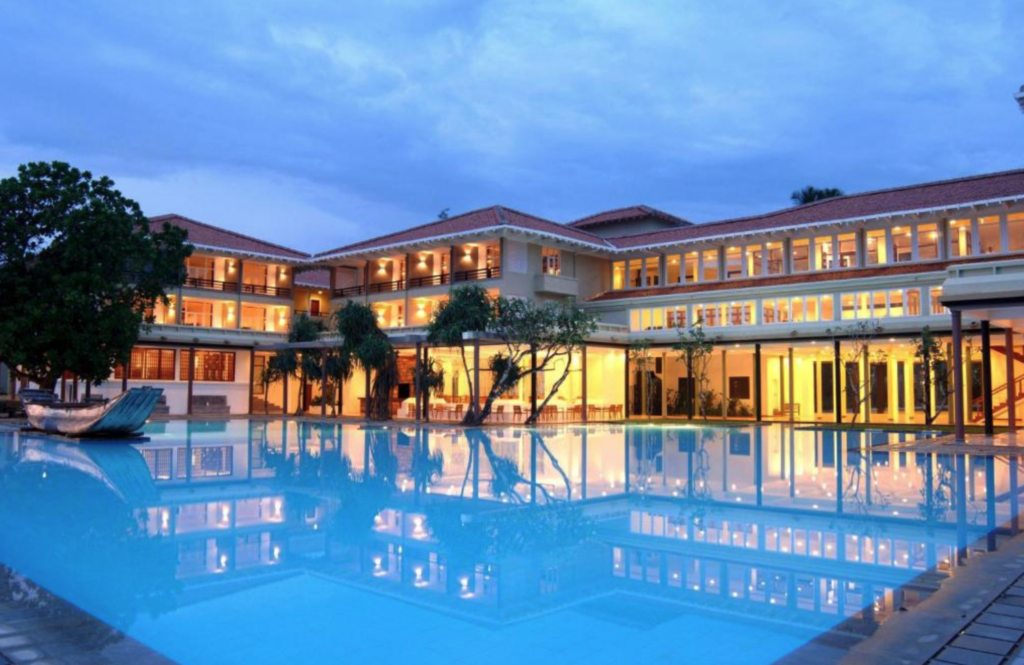
Heritance Ahungalla is said to be the birthplace of the infinity pool.
Heritance Ahungala, situated in the small town of Ahungala on Sri Lanka’s south-west coast, is a beach resort hotel designed by Geoffrey Bawa in 1981.
EmmaFormerly known as the Triton Hotel, it is recognised as one of Sri Lanka’s first large-scale resorts. Distinctive Bawa architectural features are evident throughout, most famously including the world’s first incorporation of an infinity pool into hotel architecture.
The building faces a coconut grove and white-sand beach, its design featuring terracotta-red roof tiles and white walls inspired by a Dutch colonial village, creating a beautiful appearance that stands out against the blue sky and sea.
Upon entering, the open lobby leads to the vast Indian Ocean stretching to the horizon, designed as if the building were melting into the sea.
The highlight of Heritance Ahungala is undoubtedly the world’s first infinity pool.
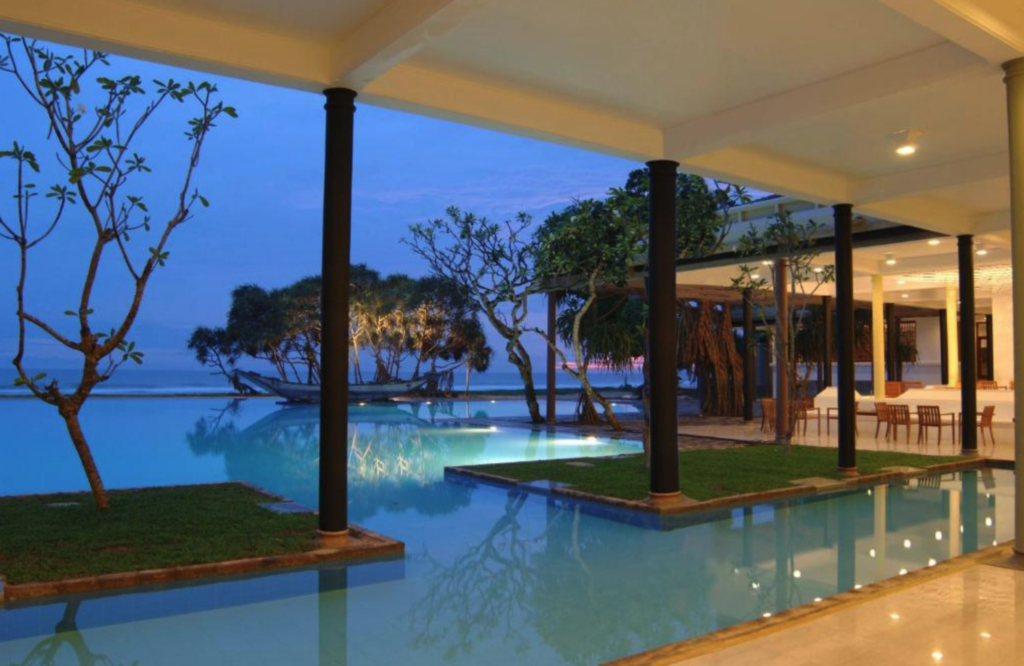
Bawa devised a design for the pool’s edge that omitted railings or other boundaries, creating the visual illusion that the pool’s water surface seamlessly merged with the sea beyond.
This innovative concept was later adopted by luxury resorts worldwide, and today the infinity pool has become a staple feature of such resorts.
RaviIts very birthplace is right here in Afungala.
The breathtaking beauty of the waterway-like landscape extending straight from the lobby, the pool, and the Indian Ocean beyond merging as one is truly stunning. By day, the blue of the sky and sea blend together, while at dusk, the water surface is bathed in a golden hue.
The hotel’s architecture itself is splendid, with two-storey guest wings arranged in a U-shape, centred around a courtyard with swaying palm trees and a swimming pool.
The boundaries between the building’s interior and exterior are deliberately ambiguous, with extensive use of airy corridors and courtyards allowing the sea breeze to flow comfortably through the structure.
Traditional Sri Lankan crafts and modern furnishings placed throughout the property are also highlights, embodying Bawa’s signature fusion of tradition and modernity.
| Item | Clear summary |
|---|---|
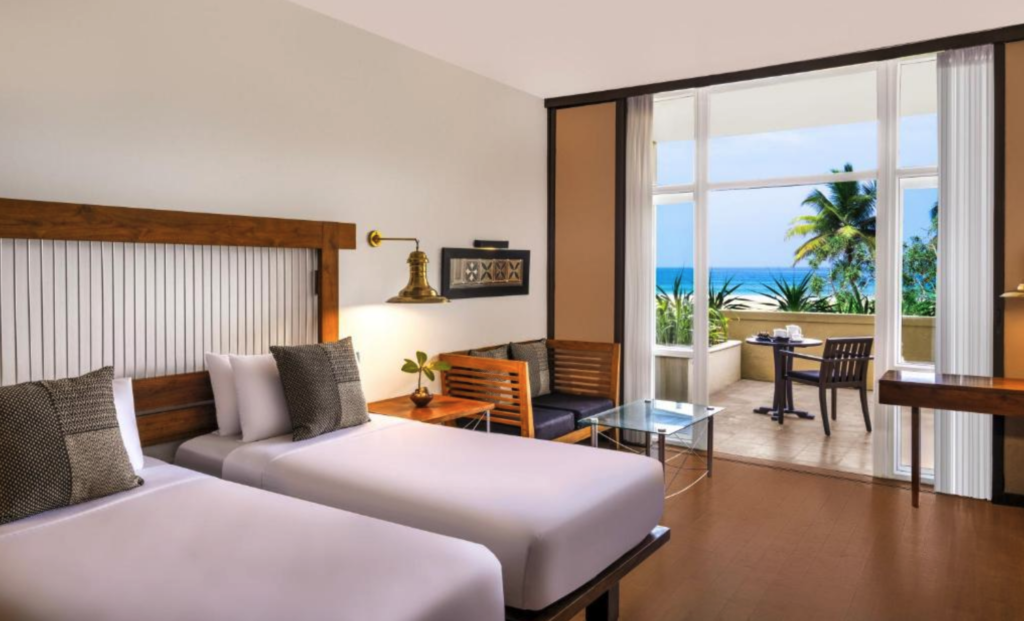
| Room features | All rooms have ocean views and private balconies. |
| Main facilities | Restaurants/bars, spa, pool, and activity facilities are well equipped. |
| Non-guest visits | With prior inquiry, non-guests may be able to use the lobby, gardens, or restaurants. Depending on availability, the front desk may allow limited viewing inside. |
| Beach / exterior viewing | The beach is public and freely accessible; you can also view the building’s exterior from the beach side. |
| Access caution | The pool area is generally for hotel guests only. |
| How to book | Easy to book via the official website or major booking platforms. |
| When to book | For peak season (especially Dec–Mar), booking early is recommended. |
| Best season | The southwest coast is most stable during the dry season (Nov–Apr), ideal for enjoying the beach and pool. |
| Off-season | Around May–Aug, rain and rougher seas are more likely, but prices may be lower. |
Approximately 80 kilometres south of Colombo city centre, it is a two to three-hour drive. With the opening of the Expressway (Southern Expressway), access from Colombo International Airport is now possible in approximately two hours by car.
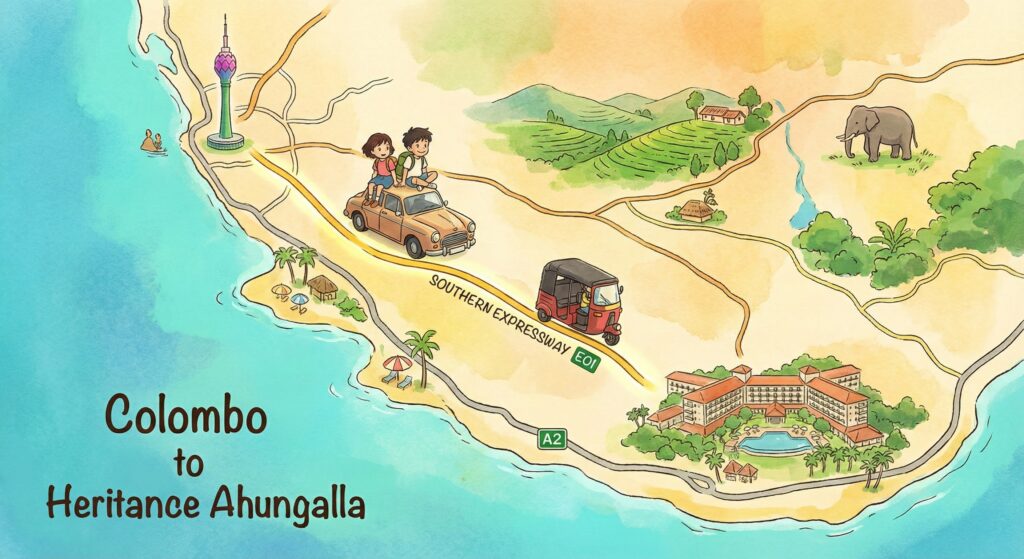
By public transport, one option is to take the train from Colombo Fort Station towards Galle and alight at Ahungalla Station (approximately 2.5 hours). From Ahungalla Station, it is about 5 minutes by taxi or tuk-tuk to the hotel.
The most comfortable option is to charter a private car from Colombo. This allows you to manage your subsequent itinerary and is also convenient for visiting the nearby World Heritage site of Galle.
Jetwing Lighthouse
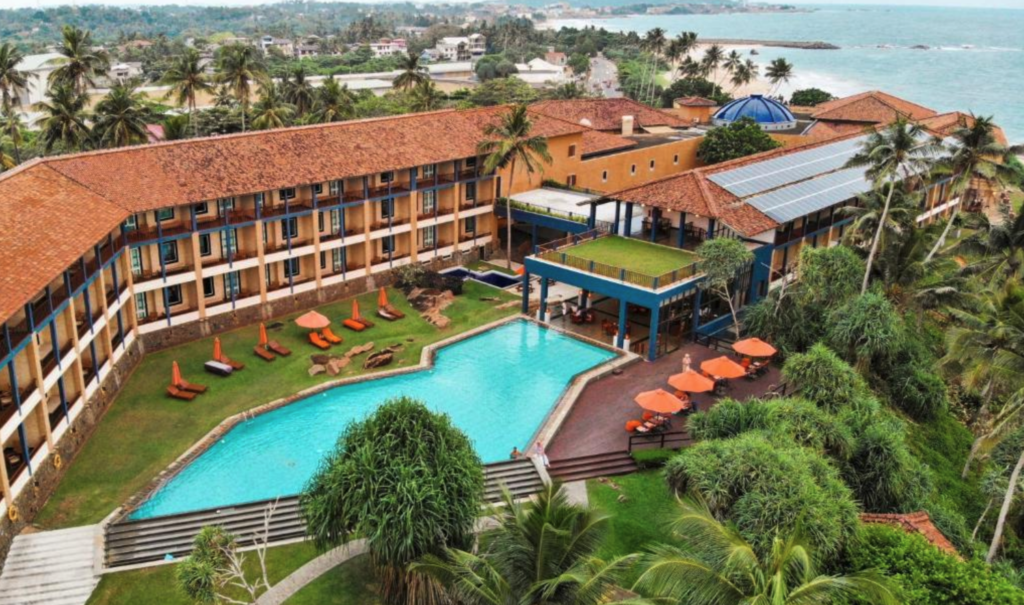
Jetwing Lighthouse is a luxury hotel that opened in 1997 near the port town of Galle in southern Sri Lanka. Regarded as one of Bawa’s late masterpieces, it stands on a hilltop close to the UNESCO World Heritage site of Galle’s Old Town.
The building is designed along a cliff overlooking the Indian Ocean, offering a landscape where the sea and architecture blend magnificently. Bawa is said to have favoured the ‘samara colour’ (orange-brown) of the sunset that colours the town of Goa, incorporating this hue into the exterior walls. Consequently, the hotel’s walls are painted a warm orange, creating a beautiful contrast with the surrounding greenery and the blue sea.
Jetwing Lighthouse is characterised by a design that skilfully blends tradition and modernity. Upon entering the lobby, the first thing to catch the eye is the massive bronze spiral staircase sculpture by local artist Raki Senanayake.
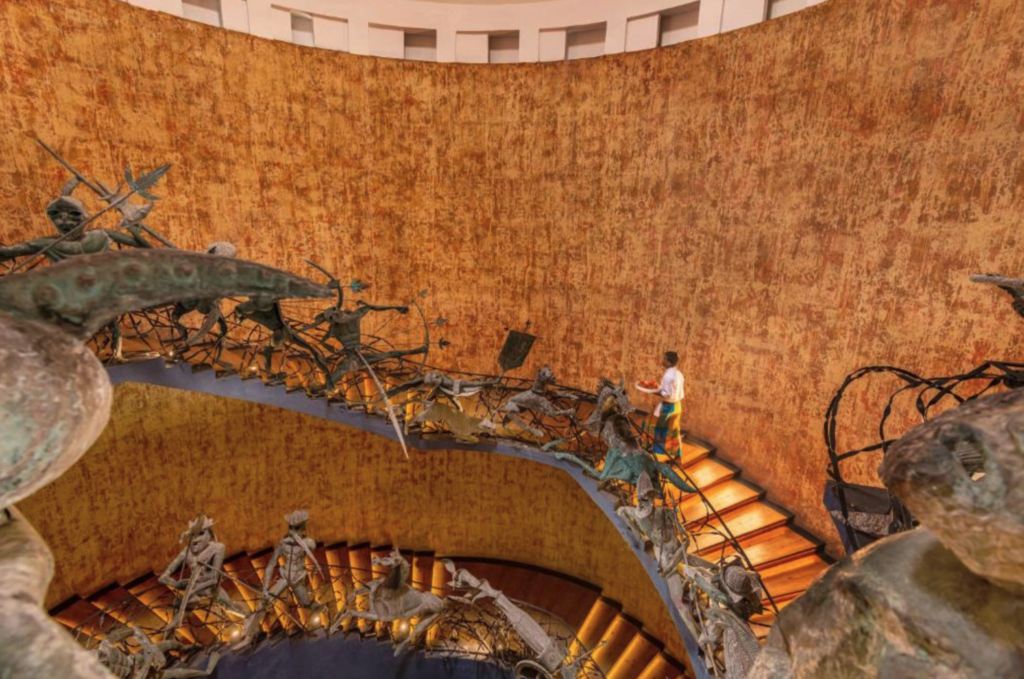
Impressive sculptures depicting battles between the Portuguese and the Sinhalese flank the staircase, inviting visitors into tales of past and present.
EmmaAt the top of this spiral staircase lies the cobalt-blue Indian Ocean stretching as far as the eye can see!
From the open-plan lounge, one can take in the dramatic seascape of waves crashing against the rocks, experiencing a sense of escapism as if aboard an ark sailing the Indian Ocean.
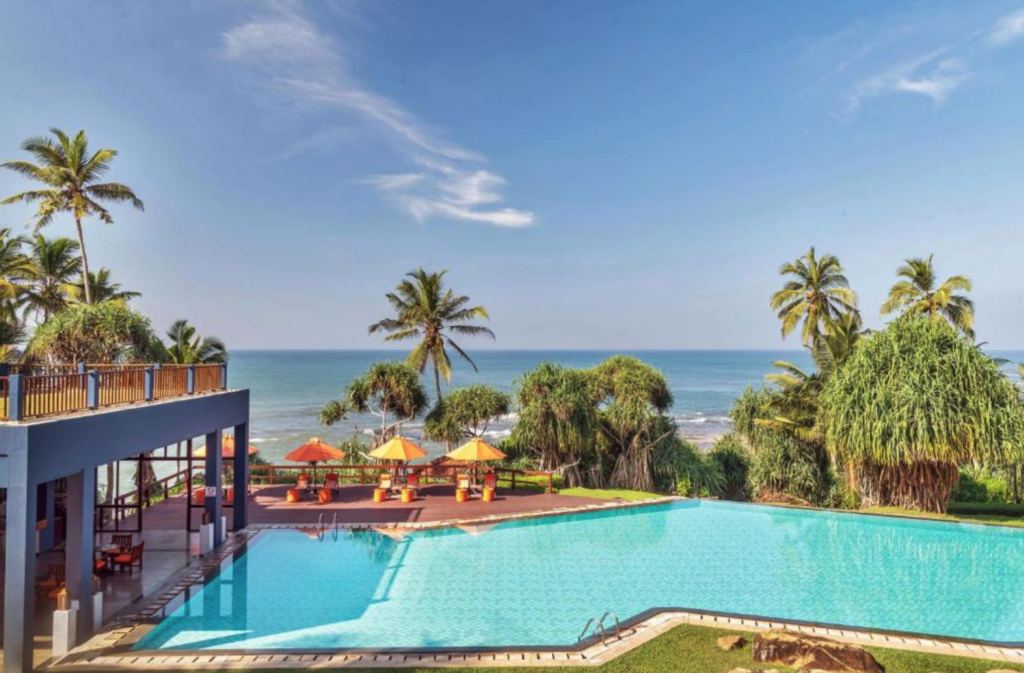
With just 63 guest rooms, it is not a large hotel, but this ensures a sense of privacy, and each room offers views of the sunset over the sea.
Bawa designed this hotel to boldly utilise the cliff terrain, incorporating the site’s massive boulders into the building structure. For instance, sections of natural rock face remain exposed in the lobby and corridors, creating a sense of the architecture merging with the surrounding landscape. The infinity pool is positioned to create a seamless continuity with the sea and horizon, evoking a sense of unity with the ocean.
At dusk, the view of the setting sun sinking below the horizon across the pool is particularly popular, making it a spot where many travellers point their cameras.
| Item | Clear summary (English) |
|---|---|
| Room features | Each room/suite has a different concept, with interiors inspired by Ceylon’s history and culture. |
| Main facilities | Fine-dining restaurant(s), bar, and an Ayurveda spa, among others. |
| Visitor access (general rule) | To protect privacy, access is generally limited to hotel guests or restaurant users. |
| How non-guests can enter | The lounge/bar may be available to non-guests with a reservation; booking afternoon tea or dinner is a good way to see the interior. |
| Possible guided look-around | If you tell staff you’re interested in architecture, they may show you around during quieter times. |
| Easy-to-see areas & photos | The lobby and the area around the spiral staircase are relatively easy to view; take photos considerately. |
| Booking timing | With a limited number of rooms, early booking is recommended, especially in high season. |
| Best season | Dry season (Dec–Mar) is recommended for better weather (but busier and more expensive). |
From Colombo, it is approximately 1.5 to 2 hours south by motorway, and about 5 minutes by car from Galle city centre. By rail, the journey from Colombo Fort Station to Galle Station takes approximately two and a half hours by express train.
From Goal Station to the hotel, it takes approximately 10 minutes by tuk-tuk. Travellers from Europe typically opt for the comfort and safety of a private car.
Many travellers will head straight to the Lighthouse for their accommodation after exploring Galle’s old town. The surrounding area is Galle’s city centre, so there are ATMs and restaurants, making your stay convenient.
Jetwing Lagoon
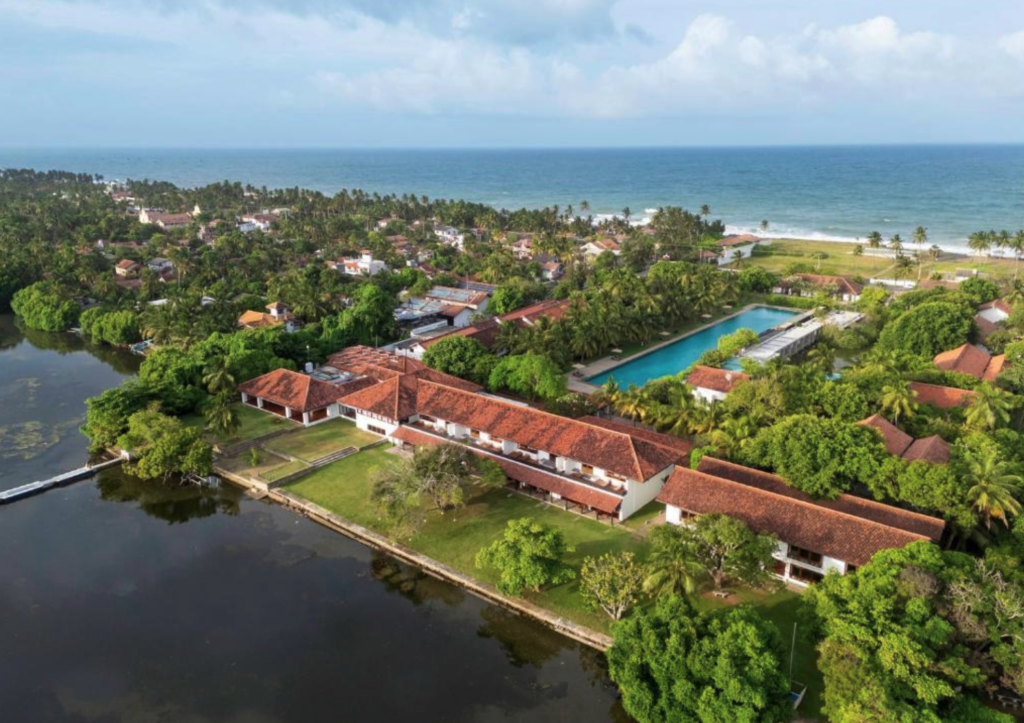
Located approximately 35 kilometres north of the capital Colombo, on the shores of the Negombo Lagoon, this resort hotel was originally named the ‘Blue Lagoon’. Designed in 1965, it is recognised as one of Bawa’s earliest hotel projects.
This historic building, often referred to as Sri Lanka’s first modern resort hotel, had been closed for a long period but was renovated and reopened in 2012 as Jetwing Lagoon.
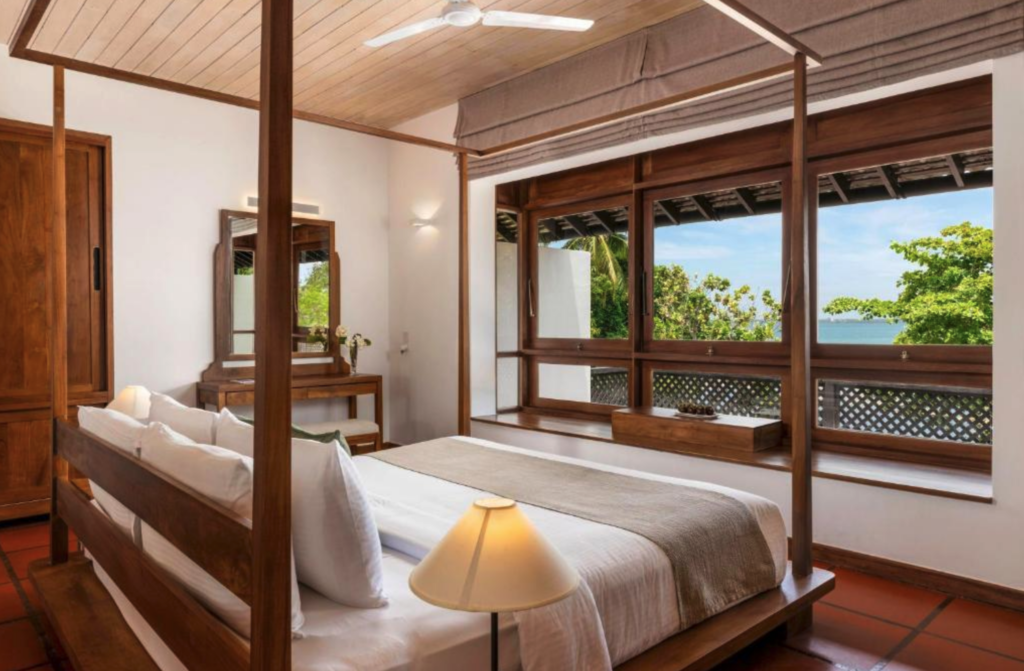
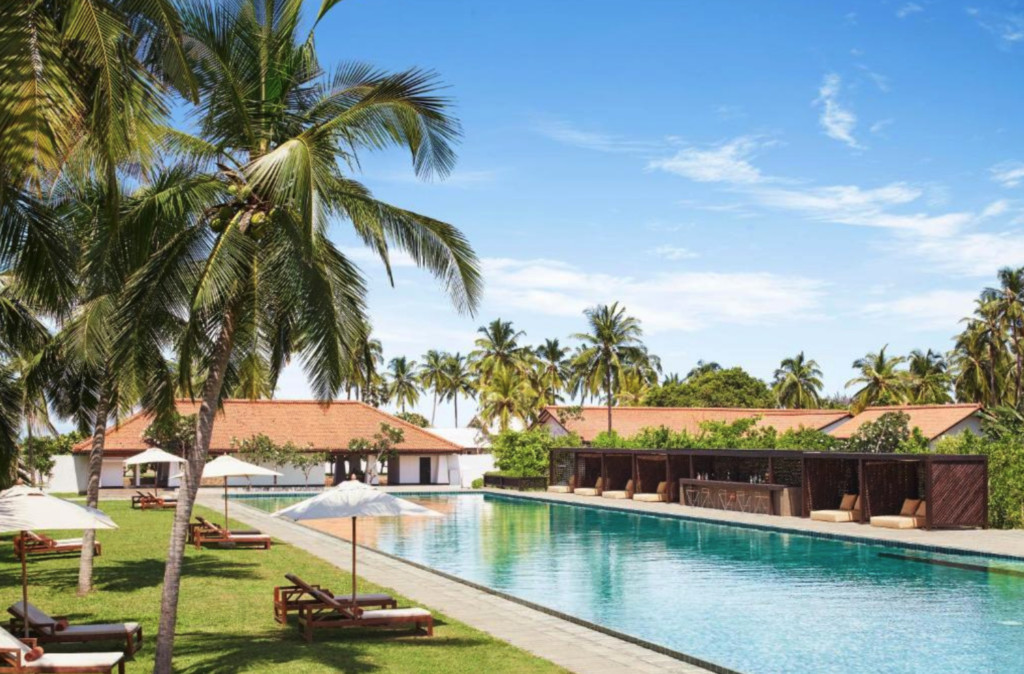
Set upon a slender plot flanked by the Indian Ocean and a lagoon, it overlooks the tranquil Negombo Lagoon on one side and the vast expanse of the sea on the other. The single-storey buildings, predominantly white and brown in colour, are simple and refined, their appearance harmonising with the tropical climate.
RaviA swimming pool boasting a length of 100 metres is situated at the centre, creating a resort-like sense of openness in combination with the palm trees.
This hotel, Bawa’s debut work, has now been reborn as a wellness resort featuring an Ayurvedic spa, and is renowned for offering stays that heal both body and mind in tranquil surroundings.
| Item | Clear summary |
|---|---|
| Room features | Low‑rise layout with lagoon‑adjacent calm; room types vary (confirm balcony/terrace + view on booking). |
| Main facilities | Long signature pool, dining, spa/wellness offerings; designed for slow, restorative stays. |
| Renovation status | Reworked/updated versus early-era fabric; expect modern comfort layered onto an older Bawa-origin concept. |
| Non‑guest visits | Day visits may be possible via restaurant/spa booking if pre‑arranged; policies can change—confirm ahead. |
| On‑site guided viewing | Not standard; staff may accommodate a brief look if occupancy and staffing allow. |
| When to book | Peak holiday weeks and airport‑adjacent demand can fill up—book early if you need a specific date. |
| Best season | Works year‑round; for drier weather, many travellers prefer Dec–Apr. |
It boasts excellent access, being approximately 30 minutes by car from Bandaranaike International Airport.
It is approximately an hour’s drive from Colombo city centre. By public transport, it is easily accessible: take the train from Colombo Fort Station to Negombo Station, which takes about an hour and a half, followed by a 15-minute taxi ride from the station.
A hotel shuttle service (for a fee) is also available for transfers to and from the airport, ensuring a smooth journey even upon arrival on late-night flights.
Thaala Bentota
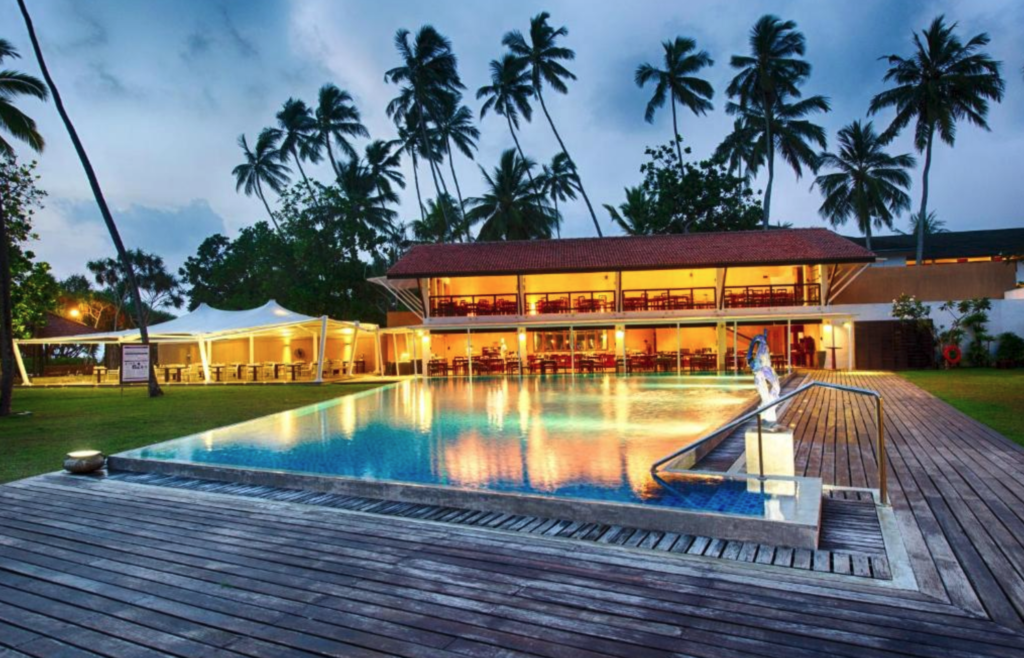
This long-established resort hotel is located in Bentota, one of Sri Lanka’s premier beach resort areas.
Originally opened in 1969 as the Bentota Beach Hotel, it was Sri Lanka’s first authentic beach resort hotel, designed by Bawa between 1967 and 1969.
From its opening, it was renowned for its architectural beauty, blending traditional styles with modern design. The interior ceilings featured vibrant batik ceiling paintings by Ina de Silva, a dyeing artist who was a close friend of Bawa, showcasing its artistic merit.
Subsequently, due to ageing, it temporarily closed in 2017. Following extensive refurbishment work lasting approximately two years, it reopened in 2019 as ‘Cinnamon Bentota Beach’. Furthermore, in summer 2023, it was rebranded to its current name, ‘Tala Bentota’, and was reborn as a sophisticated boutique resort hotel with 75 rooms.
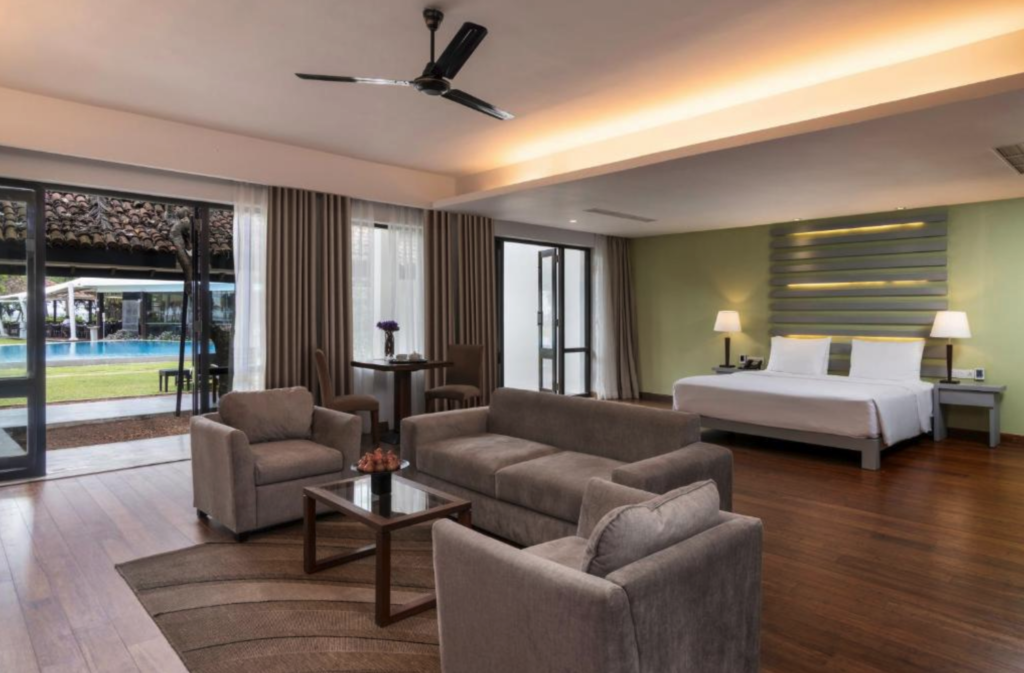
Following the refurbishment, the original architectural framework of Bawa’s design remains intact. The buildings, with their white walls and reddish-brown tiled roofs, continue to blend harmoniously with the expansive green spaces and beach.
The design essence of Bawa is carried through to various elements such as the courtyard pond and the colonnade, resulting in a finish that offers fresh surprises even to architecture enthusiasts familiar with its former glory.
| Item | Clear summary |
|---|---|
| Room features | Resort-style rooms (some sea‑oriented categories); confirm balcony/terrace + view type during booking. |
| Main facilities | Pool(s), restaurants/bars, spa; designed for classic beach‑holiday pacing. |
| Viewing basics (etiquette) | As an active resort, keep photography discreet around guest areas and pools. |
| Non‑guest visits | Sometimes possible via dining reservations; access depends on occupancy and property rules. |
| On‑site guided viewing | Not typically offered as an architecture tour; you may get limited help if you ask specifically and politely. |
| When to book | Dec–Mar and school holidays often book out early. |
| Best season | Nov–Apr for the southwest coast. |
It is approximately two hours’ drive south from Colombo (using the motorway), or approximately two and a half hours by rail.
Bentota Station is located directly opposite the hotel and serves as a major stop on the Southern Railway line, which operates services to and from Colombo Fort Station. The train journey along the coast is particularly scenic and popular with travellers from Europe.
By car, take the Southern Expressway and exit at Althugama Interchange; Bentota is then approximately 15 minutes away. It is also conveniently located for inclusion in a southern coast tour route, being around an hour’s drive or rail journey from Galle or Hikkaduwa.
The Blue Water
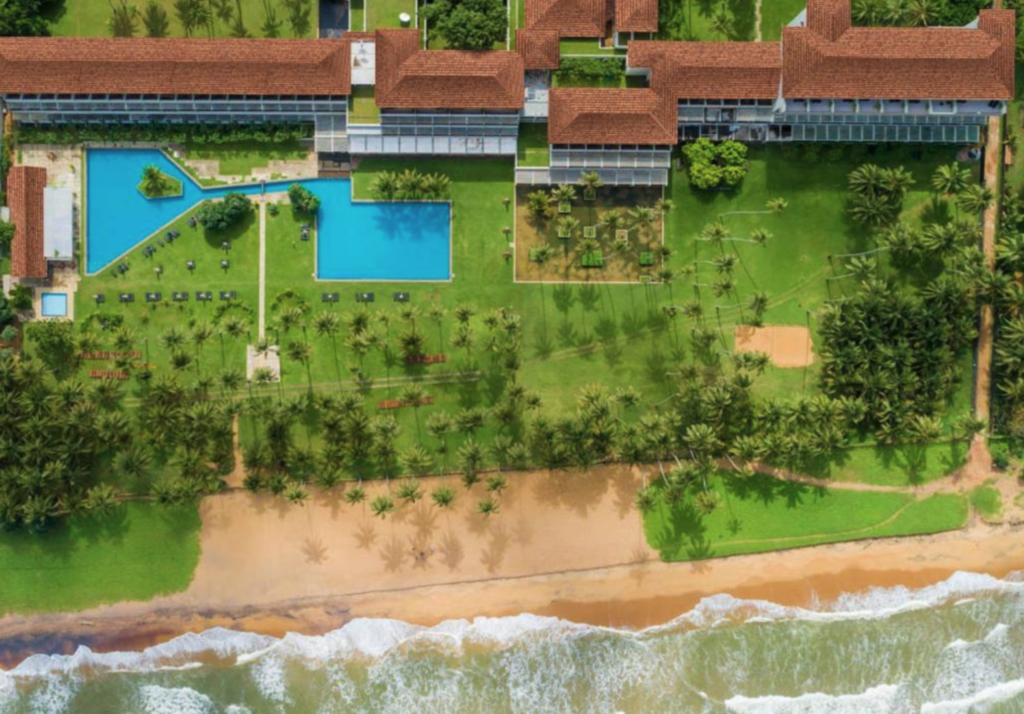
This resort hotel is situated along the coast at Wadduwa, approximately 27 kilometres south of the capital Colombo. Opened in 1998, it is known as the last hotel project for which Bawa personally oversaw construction on site.
Built on a coastal site that was originally a palm plantation, it features a tranquil design where the towering palm trees and the water surface harmonise.
EmmaThe building is a three-storey reinforced concrete structure, with an entrance porch featuring a high canopy. A central axis runs along the front, offering a direct, unobstructed view of the Indian Ocean across the water basin.
The layout, with its skilfully arranged courtyards and corridors, is regarded as a large-scale reinterpretation of the traditional rest house (travellers’ lodge) form, presenting a clever design that creates a space of ‘interval’ between the land and the sea.
Materials include pale-coloured stone with a muted sheen, terracotta tiles, and frangipani trees, resulting in a minimalist and refined tropical modernist architecture.
On the other hand, its scale of 100 rooms is imposing, exuding a monumental presence within its simplicity.
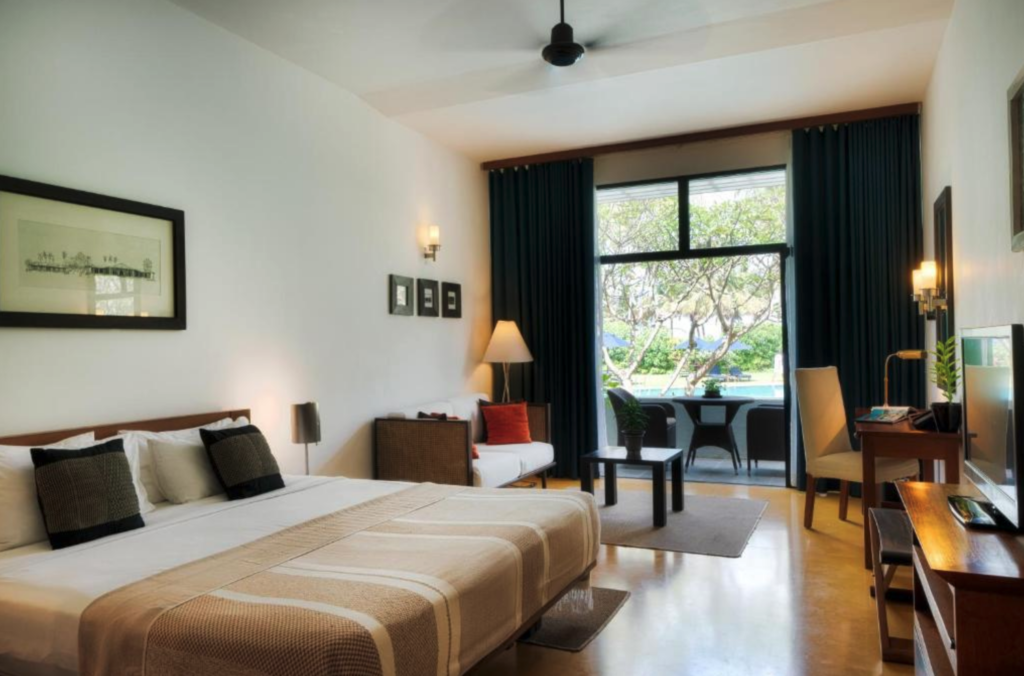
Architectural critics have highly praised it as “an approach pursuing even greater simplicity than previous works” and “creating a continuous spatial experience between land and sea”.
The view across the palm-lined avenue towards the horizon is breathtakingly beautiful, offering a resort that provides luxurious relaxation within tranquil surroundings.
| Item | Clear summary |
|---|---|
| Room features | Many rooms are designed with sea orientation; confirm balcony/terrace and exact view category at booking. |
| Main facilities | Restaurants/bars, spa, pool, fitness; a “stay on property” style of resort experience. |
| Location / sightseeing value | Good if you want a beach hotel without going far south; can be paired with a Colombo city segment. |
| Non‑guest visits | Day access is sometimes possible via restaurant/bar reservations; confirm in advance. |
| On‑site guided viewing | Not standard; staff may help briefly if timing allows and you express architectural interest. |
| Best season | Nov–Apr is generally best for the southwest coastline. |
Approximately 35 kilometres south of Colombo city centre, taking around 1 to 1.5 hours by car. By public transport, take the southbound train from Colombo Fort Station to Wadduwa Station (approximately 1 hour), then take a taxi or tuk-tuk for about 5 minutes from the station.
If travelling directly from the airport, it takes approximately two hours by car. It is advisable to use the airport transfer service or arrange a reliable taxi.
Number 11
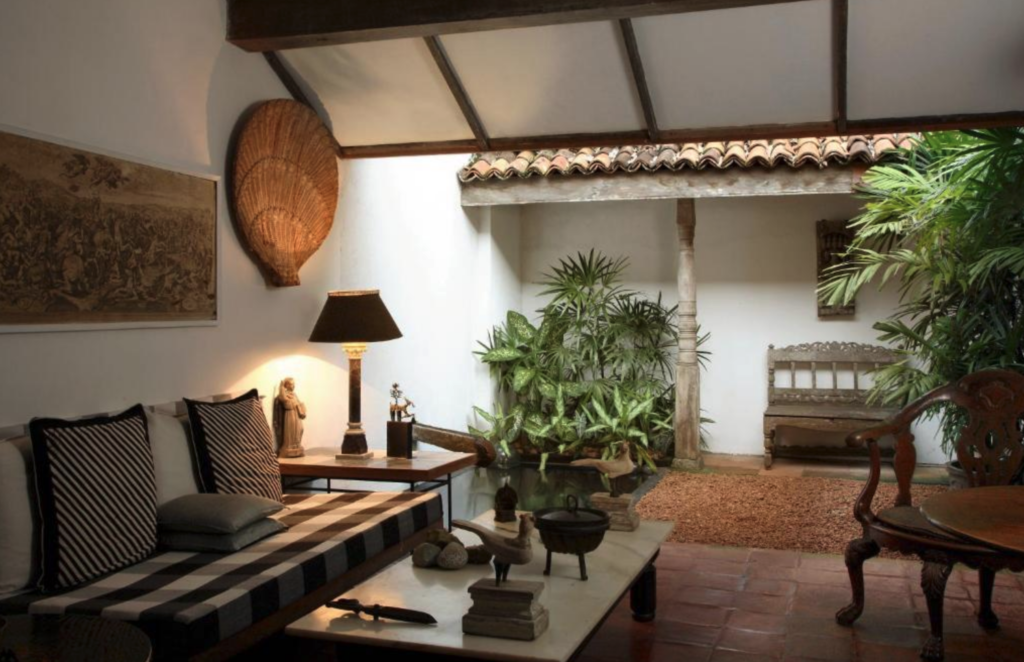
This townhouse stands quietly in a tranquil residential neighbourhood in Colombo city centre (Colombo 3 district). It is the residence where Geoffrey Bawa himself lived from 1948 until the end of his life.
Originally comprising four small houses purchased and joined together into one building, Bawa continually remodelled it like a laboratory, creating a space that embodied his design philosophy.
EmmaIt is also a legendary residence hailed by The New York Times as ‘Asia’s greatest architectural laboratory’.
The exterior presents a simple, understated appearance with white walls and wooden louvred windows. Yet upon entering, a labyrinthine space unfolds, skilfully utilising the narrow plot.
Courtyards, atriums, and green plantings are thoughtfully integrated throughout, creating a unique layout where rooms and gardens flow seamlessly together – a concept often described as ‘having a garden within the living space’.
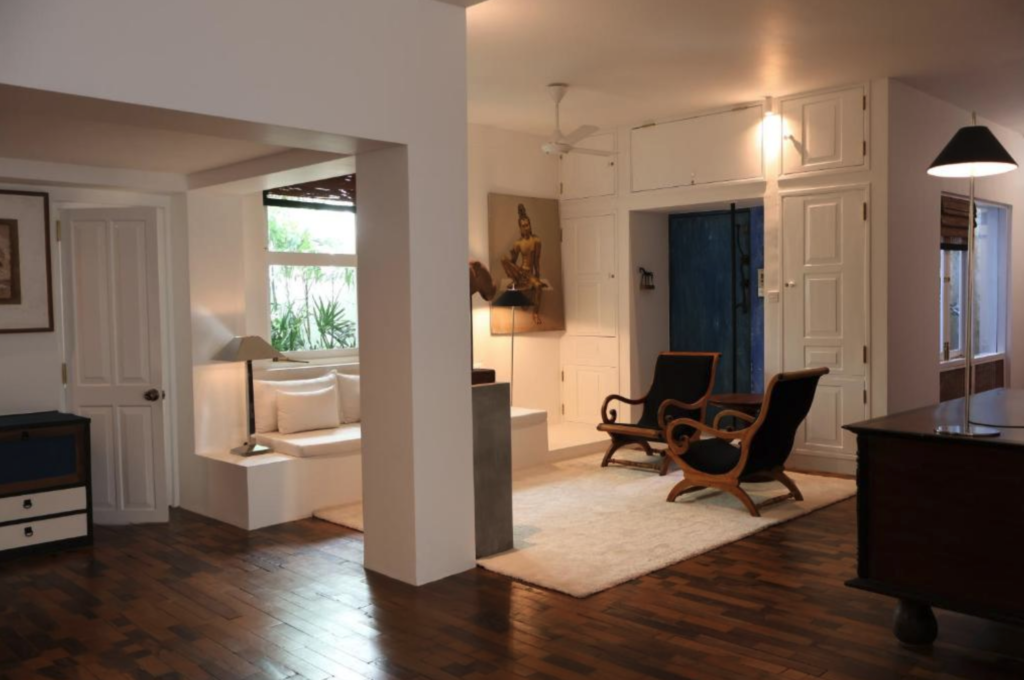
The floors and walls feature no costly materials, instead sporting simple finishes such as whitewashed plaster walls and terracotta floor tiles.
Yet this very simplicity creates a rich interplay of light and shadow, lending a profound sense of character. Artworks and antique furniture are thoughtfully arranged, and the carefully considered flow of light and sightlines throughout the space evokes the tranquillity of a quiet art gallery.
The space, modern in its overall feel yet imbued with a deep affection for Sri Lankan traditions and way of life, continues to captivate visitors, not just architecture enthusiasts.
| Item | Clear summary |
|---|---|
| Visitor experience | A compact but dense sequence of courtyards, light wells, and layered rooms—often described as a “spatial laboratory.” |
| Main facilities | This is not a hotel facility set—think curated interiors, art/objects, and controlled visitor flow. |
| Location / sightseeing value | Central Colombo; pairs well with other city stops (museums, temples, café culture). |
| Renovation / conservation | Conserved to reflect Bawa’s lived-in atmosphere; changes are typically conservation-led, not commercial. |
| Non‑guest visits | Visits are generally only via pre‑booked guided tours (no walk‑ins assumed). |
| Guided viewing | Yes—guided tour is the standard format; expect time slots and limited group size. |
| Best season | Year‑round (it’s in the city), but mornings are cooler and better for a calm visit. |
Located in Colombo city centre (the Kolombo Pitiya district), the surrounding area is home to embassies and upmarket residences.
It is approximately a 15-20 minute taxi journey from the city’s main hotels. By public transport, take a Colombo city bus or train to the nearest station, Bambalapitiya, and then access the hotel on foot or by short-distance transport.
It is located in a secluded spot within a residential area, and the entrance is inconspicuous, so using a taxi is advisable. The location (No. 11, 33rd Lane, Bagatelle Road, Colombo 3) and a map link are provided in the guidance email sent when booking your visit.
If using Uber or PickMe (local ride-hailing apps), specifying this address will ensure a smooth journey.
Lunuganga
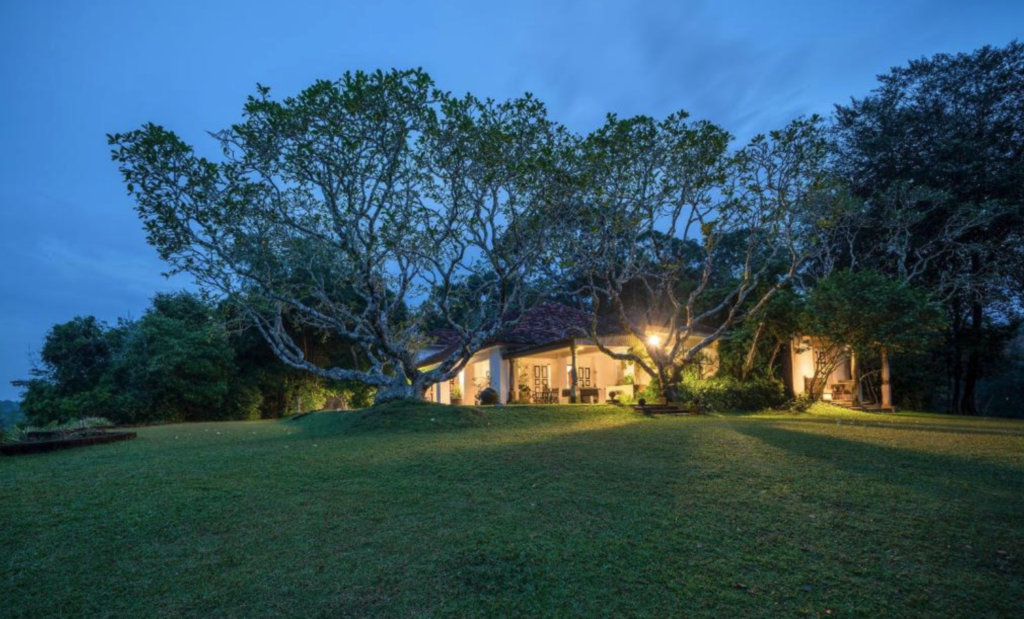
This private paradise, a garden-enclosed residence set upon a vast 15-acre (approximately 6-hectare) plot near Bentota in southwestern Sri Lanka, was created by Geoffrey Bawa over the course of his life, beginning in 1947.
Originally cinnamon and rubber plantations, the land was purchased and the hilly terrain, which was little more than wasteland, was gradually cleared and levelled, transforming it into a beautiful tropical landscape garden.
Lunuganga means ‘Salt River’ in Sinhala, and the estate is situated on a peninsula jutting out into Bentota Lake (formerly known as Lunuganga Lake). Within the grounds, gently undulating lawns, jungle groves, scattered pavilions and sculptures, and waterside terraces are artfully arranged, unfolding a landscape like a painting.
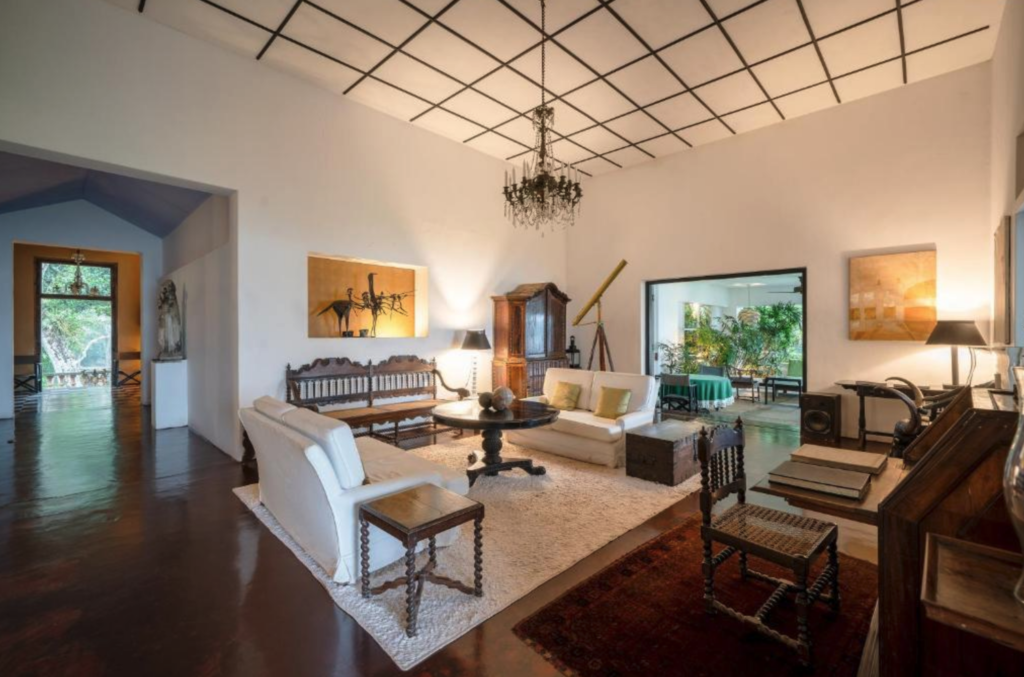
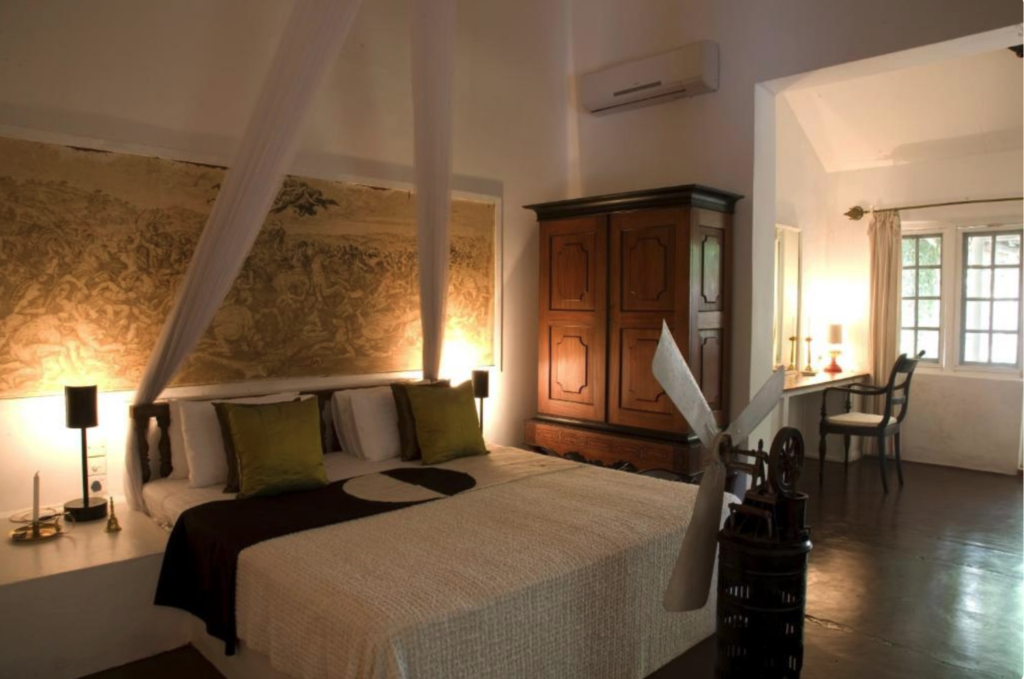
The building itself is a simple, single-storey country house, yet its design creates an open flow between indoors and outdoors, allowing one to enjoy views of the garden, carefully designed to serve as borrowed scenery, through the windows.
Bawa continued to travel to this site until his extremely busy final years as an architect, personally directing the garden’s upkeep and alterations. Consequently, this garden, which underwent constant transformation throughout his lifetime, came to be described as a ‘living work of art’ and is internationally renowned as one of the most significant gardens representing 20th-century Asia.
| Item | Clear summary |
|---|---|
| Visitor experience | Bawa’s long‑term “living landscape” project—garden rooms, framed vistas, and carefully staged walks. |
| Location / sightseeing value | Perfect as a Bentota‑area day trip; pairs well with other southwest Bawa points. |
| Viewing basics (etiquette) | Guided-route rules apply; stay with the group, don’t cross ropes/plantings, and keep noise low. |
| Non‑guest visits | Yes—typically via set tour times (often guided), not free roaming. |
| Guided viewing | Yes—guided garden tour format is the norm; check tour times and languages. |
| How to arrange | Buy tickets/slots through the estate’s official channels; accommodation via the operator/official booking route. |
| Best season | Garden is compelling year‑round; many travellers prefer dry season months for comfort. |
minutes by car.
As it is difficult to reach directly by public transport, the usual route from Colombo is to take the train to Bentota Station and then proceed by taxi or tuk-tuk.
The journey from Colombo to Bentota Station takes approximately one hour and ten minutes by express train. By car, it takes approximately one and a half hours from Colombo via the Southern Expressway.
If you are staying at a nearby resort (such as Tara Bentota or Club Villa), the hotel can arrange a car for you. Lunuganga is surrounded by villages and countryside, and the signposts are small, so if you are visiting for the first time, it is advisable to check that your driver knows the location.
Seema Malakaya Temple
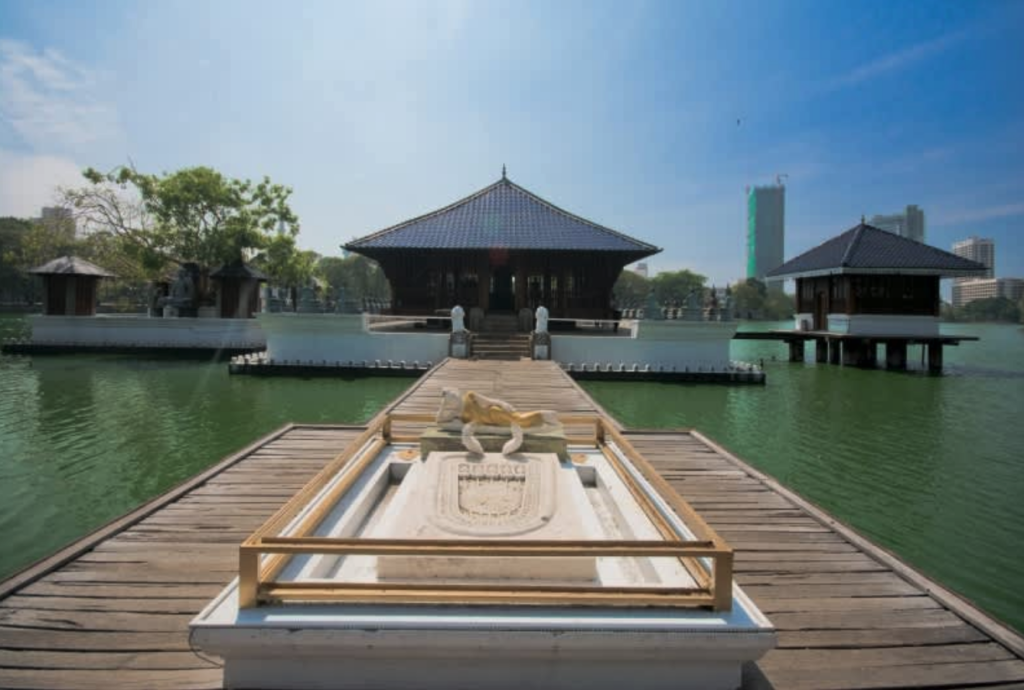
This Buddhist temple appears to float upon Beira Lake in Colombo’s city centre and serves as a waterfront annex to the Gangaramaya Temple.
The wooden temple, built in the late 19th century, had deteriorated and sunk into the lake, prompting Geoffrey Bawa to undertake its reconstruction in 1976. This floating temple, comprising a small hall with a triangular roof and a pavilion, draws its design inspiration from the ancient forest temples of Anuradhapura and Rithigala.
RaviThree platforms (floating islands) positioned upon the lake are connected by a pontoon bridge. The central island houses a meditation hall; the island to the right features a Bodhi tree and shrines to Hindu deities at its four corners; and the island to the left contains a hall enshrining a reclining Buddha.
Whilst employing traditional elements such as tiled roofs and wooden handrails, the open layout seamlessly integrated with the surrounding lake exudes a modern sensibility.
The striking contrast between the blue tiled roof and the white Buddha statues is beautiful, and during the day, their reflection on the clear lake surface creates a mystical atmosphere.
As a tranquil space for meditation amidst the city’s bustle, it is cherished by both locals and visitors.
| Item | Clear summary |
|---|---|
| Visitor experience | A calm, water‑based pavilion composition: modern clarity blended with traditional cues. |
| Main facilities | Prayer/meditation spaces, platforms over water, devotional elements. |
| Renovation / conservation | Maintained as a working religious place; minor upkeep evolves over time. |
| Non‑guest visits | Yes—generally open to visitors during daytime; rules can vary by religious events. |
| Guided viewing | Typically no formal tour on site; self‑guided respectful visit. |
| How to arrange | No booking usually required; donations/tickets may apply if entering via connected temple systems. |
| Best season | Works year‑round; weather mainly affects comfort, not access. |
It is approximately 10 to 15 minutes by car from Colombo city centre (such as the Galle Face area) and about 5 minutes from the Cinnamon Gardens area. By public bus, alight near Town Hall or Viharamahadevi Park and walk for about 10 minutes.
It is conveniently located for a visit as part of sightseeing in Colombo city. Although situated along a busy road, the temple grounds offer a surprisingly tranquil space once you step inside.
It is advisable to visit the neighbouring Gangaramaya Temple (a 3-minute walk) as part of the same itinerary. Furthermore, on the full moon day of February each year, the Gangaramaya Temple holds its Perahera Festival, a splendid event where numerous elephants and dancers parade from the temple.
During this time, the Seema Malakaya Temple also becomes part of the festival grounds, attracting large crowds of worshippers annually.
Sri Lanka Parliament Building
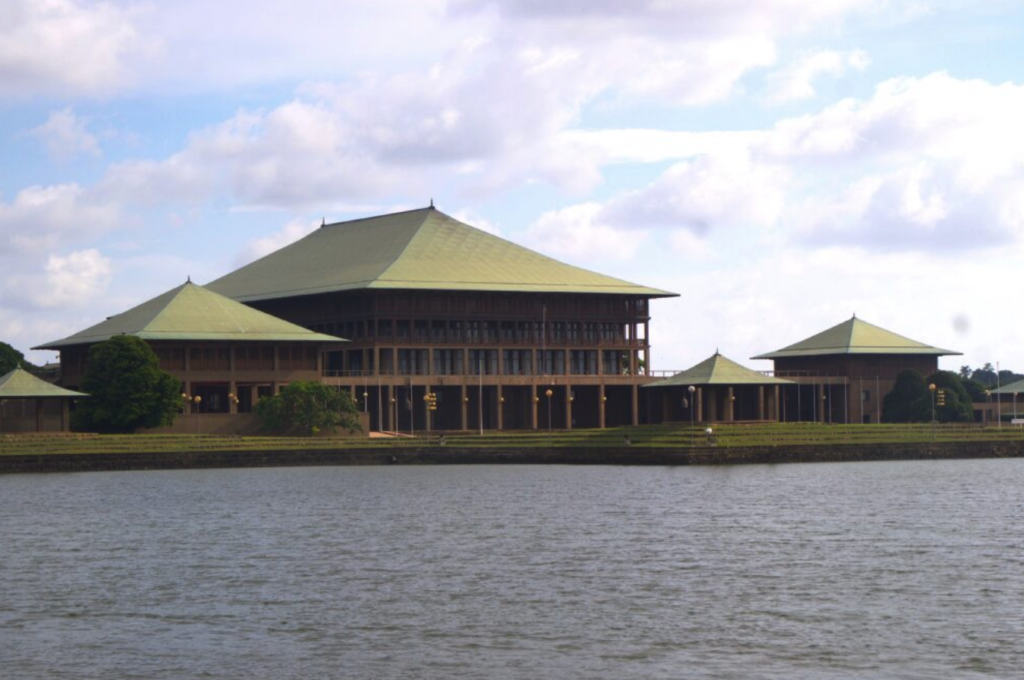
The Parliament House, completed in 1982, is located in Sri Jayawardenepura Kotte, approximately 10 kilometres east of Colombo.
One of Bawa’s finest public buildings, this magnificent structure stands upon an artificial island. Surrounded by Lake Dhiyawana, its appearance, as if floating upon the water, is highly impressive; viewed from afar, its multiple pagoda-style roofs appear to overlap.
The overall form appears symmetrical, yet it is arranged to follow the natural contours of the lake, possessing an organic expansiveness. The architectural style is described as ‘regional modernism’, a design that blends modern functionality with the stylistic beauty of Sri Lankan tradition.
The vast vermilion tiled roof and colonnade evoke the palace architecture of the Kandyan Kingdom era, while the exterior walls’ colour scheme and materials were deliberately chosen to blend harmoniously with the surrounding landscape.
On the other hand, the interior is a modern building in its own right, equipped with the latest parliamentary facilities, and Bawa masterfully achieved a harmony between the contemporary and the traditional.
Within the grounds lie meticulously maintained green spaces and ponds, with a public park laid out encircling the buildings. It is both the political heart of Sri Lanka and a renowned architectural masterpiece possessing spaces of poetic charm.
| Item | Clear summary |
|---|---|
| Main facilities | Not visitor‑oriented; access is operational and security‑controlled. |
| Location / sightseeing value | Meaningful for architecture/politics enthusiasts; often combined with nearby parks/wetlands. |
| Renovation / conservation | Government-managed upkeep; public information on changes is limited. |
| Viewing basics (etiquette) | Do not approach gates/guards for photography; follow all instructions immediately; avoid drones entirely. |
| General public access | Typically not open for casual tourism; any internal visit depends on official permission protocols. |
| How to request a visit | If visits are possible, they require advance official approval (often best handled through a reputable local operator). |
| Security rules | Expect ID checks; photography restrictions may apply even when permitted. Policies can change without notice. |
It is approximately 30 to 40 minutes by car from central Colombo. By public transport, options include taking bus number 106 from Colombo Fort Station, which takes about an hour (bound for Kotte Battaramulla), but as there is a considerable walk after alighting, taking a taxi is advisable.
Even if you cannot enter the Parliament House itself, there are several attractions nearby, such as the natural park and the restored ancient village of ‘Ape Gama’. Hiring a taxi for a half-day tour is highly recommended. Along the way, you will also pass the Sri Lanka National Education and Training Centre (SNECC), built with support from the Japanese government, making this an area with deep connections to Japan.
Summary
The above introduces ten of Geoffrey Bawa’s finest architectural works scattered across Sri Lanka, aimed at travellers from Europe.
The allure of Bawa architecture lies in its overwhelming sense of spatial beauty, harmonised with tropical nature, where one experiences the sensation of the body dissolving into the environment simply by standing within it.
When visiting Sri Lanka, why not consider incorporating an itinerary centred around the architecture featured here? You are sure to experience profoundly moving discoveries that go beyond conventional sightseeing.
The architectural legacy of Bawa remains undimmed by the passage of time, continuing to speak to us today of the vital importance of living in harmony with nature. Placing oneself within the spaces Bawa created on this island nation, so distant from Europe and Britain, promises a unique experience where the clamour of daily life fades and the spirit finds release. We invite you to enjoy a pilgrimage through the finest architecture in South Asia.

コメント